← Back to Articles

Cat Eye Health Guide: What to Look For, Common Causes, and When to Call the Vet

Clear eyes, comfy cat.

Watery eyes, gunky corners, squinting, or redness are all common cat problems — especially in indoor cats where dust, litter, and air quality can quietly build up.

This guide helps you spot early signs, understand common causes , and know when it’s time to speak to a vet.

We’ll focus on three simple eye-health pillars:

  • Spotting changes early (what “normal” looks like)
  • Reducing irritants (dust, litter, sprays, stale air)
  • Supporting long-term eye and vision wellness with daily nutrition

This article is general guidance, not a diagnosis — but it will help you make sense of what you’re seeing and choose the safest next step.
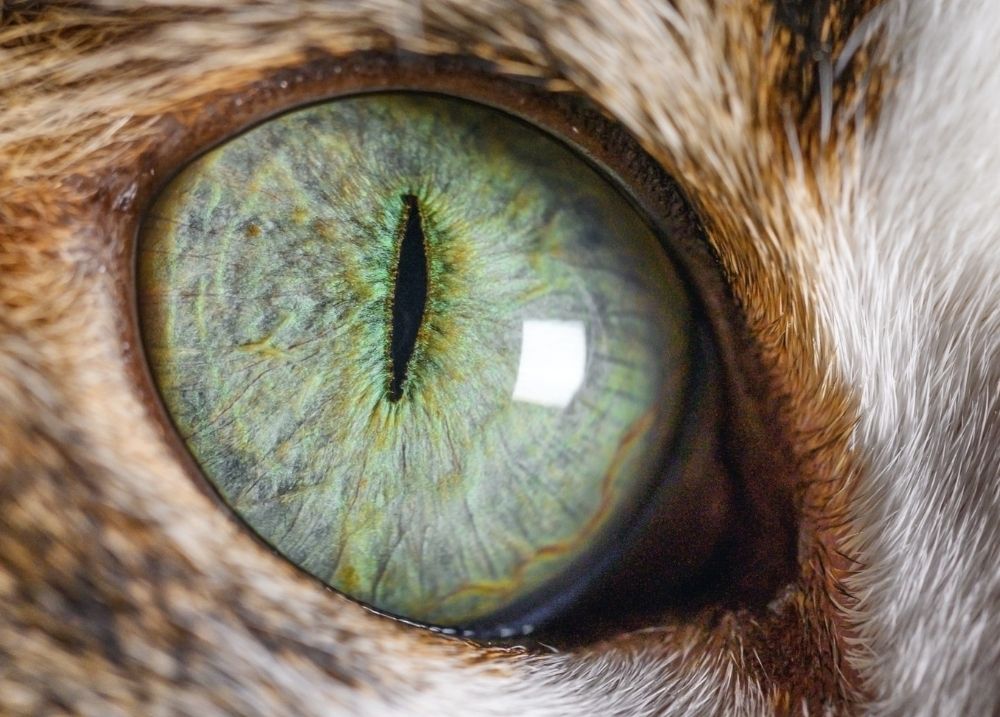
Cat with bright, healthy eyes
Tags: Eye Health • Discharge • Allergies • Vision Support

What Healthy Cat Eyes Usually Look Like

Use this as a simple baseline. Healthy eyes are typically:

  • Bright and clear (no haze or cloudiness)
  • Open comfortably (no squinting or winking)
  • Not overly watery (a tiny bit of “sleep” can be normal)
  • White of the eye looks white (not red or angry)
  • No swelling around lids
  • Third eyelid (the pale inner lid) is not showing much

If you’re unsure, the most useful thing to watch is change — what’s different from your cat’s normal.

Signs Something’s Off

Eye issues can worsen quickly, so it’s worth noticing early clues. Look for:

  • Squinting, blinking more than usual, or holding an eye closed
  • Redness, swelling, or heat around the eye
  • Watery tearing that keeps returning
  • Gunk/crust at the corners (especially if it’s thick)
  • Pawing at the face or rubbing on furniture
  • Cloudiness or a blue/grey haze
  • Visible third eyelid
  • Light sensitivity
  • Clumsiness or bumping into things (possible vision change)

What the Discharge Can Tell You

Goal: Use “what it looks like” as a clue for what to do next.
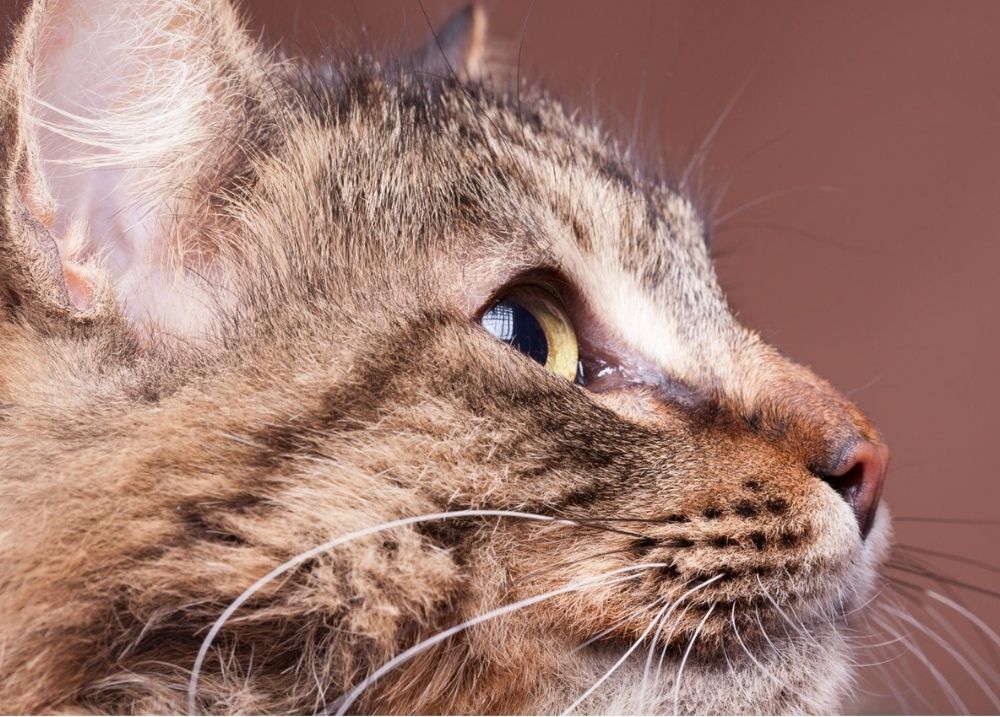
Cat being gently checked

Common Types of Eye Discharge

  • Clear, watery tears: Often irritation — dust, wind, pollen, mild scratch, or a blocked tear duct. Also common with dusty litter.
  • Brown/rust staining: Tear overflow that dries on fur. Can be chronic mild irritation, anatomy (some breeds), or environmental triggers like dust.
  • White/grey mucus: Mild irritation or early infection. Keep an eye on whether it’s improving or getting thicker.
  • Yellow/green thick discharge: Infection is more likely — this is a strong reason to speak to a vet.
  • One eye only vs both eyes: One eye often suggests a scratch/foreign body. Both eyes are more commonly allergy, irritant exposure, or viral causes.

This isn’t a diagnosis — it’s a guide to help you decide whether to monitor, reduce irritants, or call your vet.

Common Causes (and Simple Fixes That Often Help)

Goal: Reduce the things that irritate eyes every day — especially indoors.
Indoor cat by a window

The Usual Suspects

  • Dusty indoor air: Indoor cats can be more affected by dust because air gets “stale”.
    • Putting windows on latch can help circulation safely.
    • You can air one half of the house at a time and keep cats in the other half while you do it.
    • Regular vacuuming + wiping surfaces reduces dust that settles near eye level.
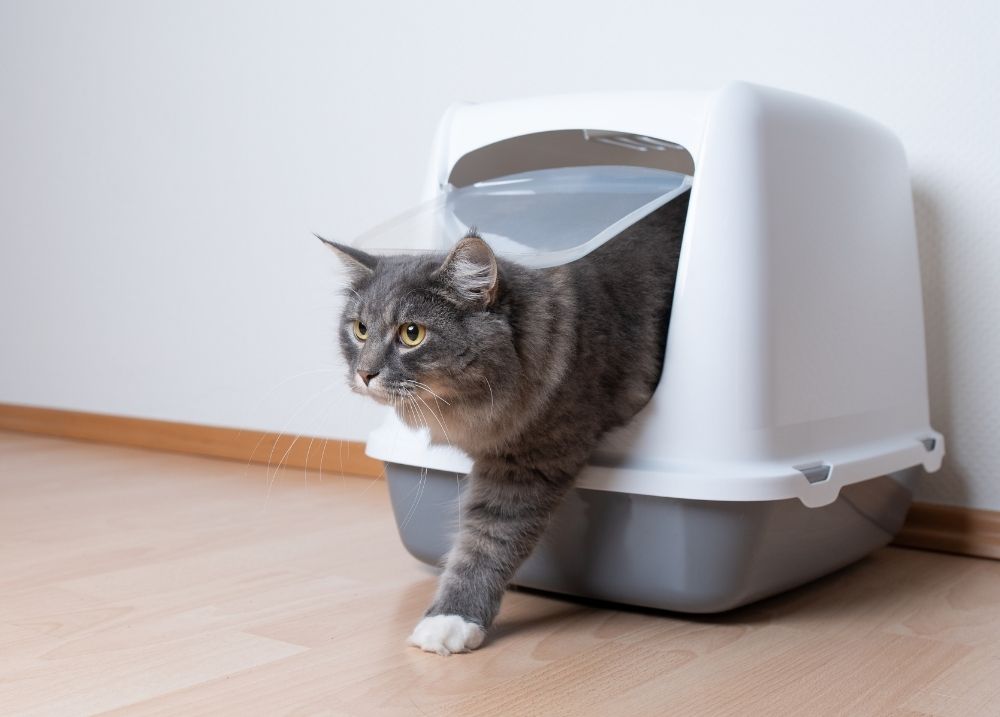
  • Dusty litter (very common): Some cheaper litters are extremely dusty and can cause watery, gunky eyes.
    • Low-dust options often include paper litter, wood pellets, or hypoallergenic / low-tracking litters.
    • Some cats are fussy — a gradual change or offering a second tray can help them accept a new litter.
  • Allergens & irritants: Pollen, cleaning sprays, scented candles/plug-ins, smoke, perfumes, and strong detergents can trigger watery eyes.
  • Viral “cat flu” group: Can cause watery eyes, discharge, and sneezing. If your cat seems unwell overall, speak to a vet.
  • Scratches / foreign bodies: A tiny scratch from play or a bit of grit can cause intense squinting and tearing — this usually needs a vet check.
  • Blocked tear ducts / anatomy: Some cats naturally tear more, especially flat-faced breeds. Persistent tearing should still be discussed with a vet.
  • Dental links (surprising but real): Tooth/root issues can sometimes contribute to one-sided watery eye problems.

If your cat’s eyes improved after switching away from a dusty litter and improving air quality in your home — that’s a strong sign irritants were the main trigger.

One Eye vs Both Eyes

This simple distinction can help you decide what’s most likely going on.

  • One eye: More often irritation, scratch, foreign body, blocked tear duct, or dental-related issues (especially if it’s recurring on the same side).
  • Both eyes: More often allergy, dust/air irritants, viral causes, or general environmental triggers.

If you see squinting or your cat won’t open the eye, treat it as urgent — eyes can deteriorate quickly.

At-Home Support (Safe, Gentle Steps)

For mild, watery or slightly gunky eyes — especially if you suspect dust — these habits can help.

  • Clean gently: Use a soft, damp cotton pad to wipe from inner corner outward (use a fresh pad per eye).
  • Reduce irritants: Switch dusty litter, avoid aerosols/sprays, and improve airflow where possible.
  • Trim long fur: Long fur near the eyes can trap discharge and worsen irritation.
  • Keep an eye diary: Note litter changes, window airing, cleaning products, and patterns.
  • Avoid human eye drops: Only use drops recommended by your vet.

If symptoms aren’t improving within 24–48 hours, or your cat seems uncomfortable, speak to a vet.

When to Speak to a Vet

It’s always okay to be cautious with eyes. These signs should be checked, especially in kittens, seniors, or cats with existing conditions:

  • Squinting or holding the eye closed
  • Cloudiness, a blue/white haze, or a visible change to the eye surface
  • Swelling around the eye or significant redness
  • Thick yellow/green discharge
  • Third eyelid showing suddenly or more than usual
  • Pupils suddenly different sizes or unusual pupil behaviour
  • Obvious pain (pawing, rubbing, crying, hiding)
  • Vision changes (bumping into things, hesitating on steps, sudden clumsiness)
  • Symptoms that persist or keep returning

This guide is for general support and observation, not a diagnosis. If your cat is unwell or symptoms persist, a vet check is the safest next step.

Where an Eye & Vision Powder Fits In

Eye symptoms often have environmental triggers (dust, litter, irritants), but long-term eye and vision wellness can also be supported from the inside out with consistent daily nutrition.

Our Eye & Vision Powder is designed for everyday support — with essential nutrients and antioxidant support to nourish normal eye health over time. It’s not a cure for infection or injury, but it can be a simple daily habit for ongoing wellbeing and visual support.
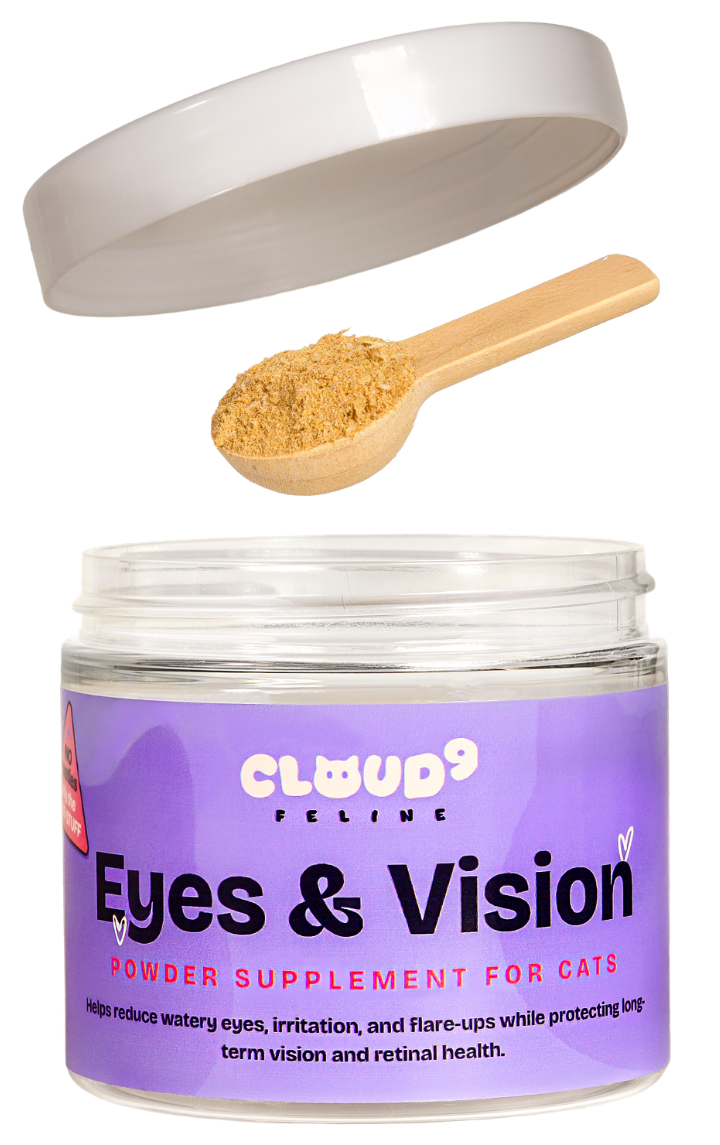
Eye & Vision powder supplement jar

Why These Ingredients Matter

  • Taurine — essential amino acid to support normal vision and eye health
  • Omega support — algae omega + krill meal to nourish delicate tissues
  • Zeaxanthin — carotenoid support for retinal and visual function
  • Antioxidants — grape seed support for delicate eye tissues
  • Zinc — supports normal vision and overall eye health
  • L-Lysine — everyday nutritional support for immune and eye wellness

Easy Daily Routine

  • Designed to be mixed into food daily
  • Great taste support from chicken liver + salmon for consistent use
  • Best used alongside a low-dust home and calm routines

We Want to Hear Your Success Stories!

Have any of the Cloud9 formulas or accessories helped your cat feel happier, healthier, or more comfortable?

Send us a photo and a review — your cat could feature on our site and socials!

Share Your Story Leave a Review
Happy cat success story

Feature your cat!

Best Sellers